Henry County Bicentennial
Explore Henry County
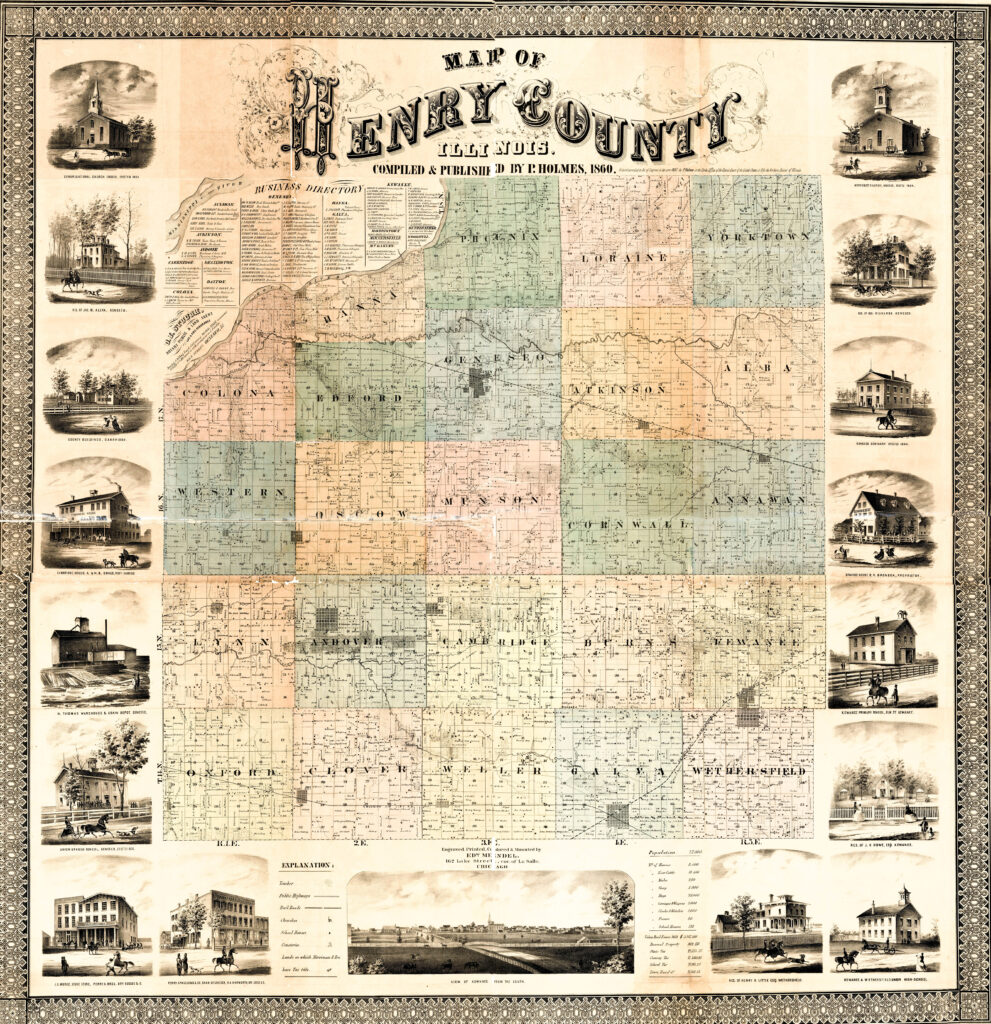
Established on January 13, 1825, from Fulton County, Illinois, and Named After Revolutionary War Champion Patrick Henry. Explore the rich history of Henry County, settled by New England and western New York pioneers. Home to five original towns—Andover, Wethersfield, Geneseo, Morristown, and La Grange—this region showcased a unique cultural heritage reminiscent of early New England. The County seat, Cambridge, was founded in 1843 when Rev. Ithamar Pillsbury dedicated land for its development, marking a significant step in our community’s growth.
Now celebrating 200 years, we want to look back and remember key moments that have shaped this area into what is has become today! Check back weekly for new fun facts and photos from throughout the years!
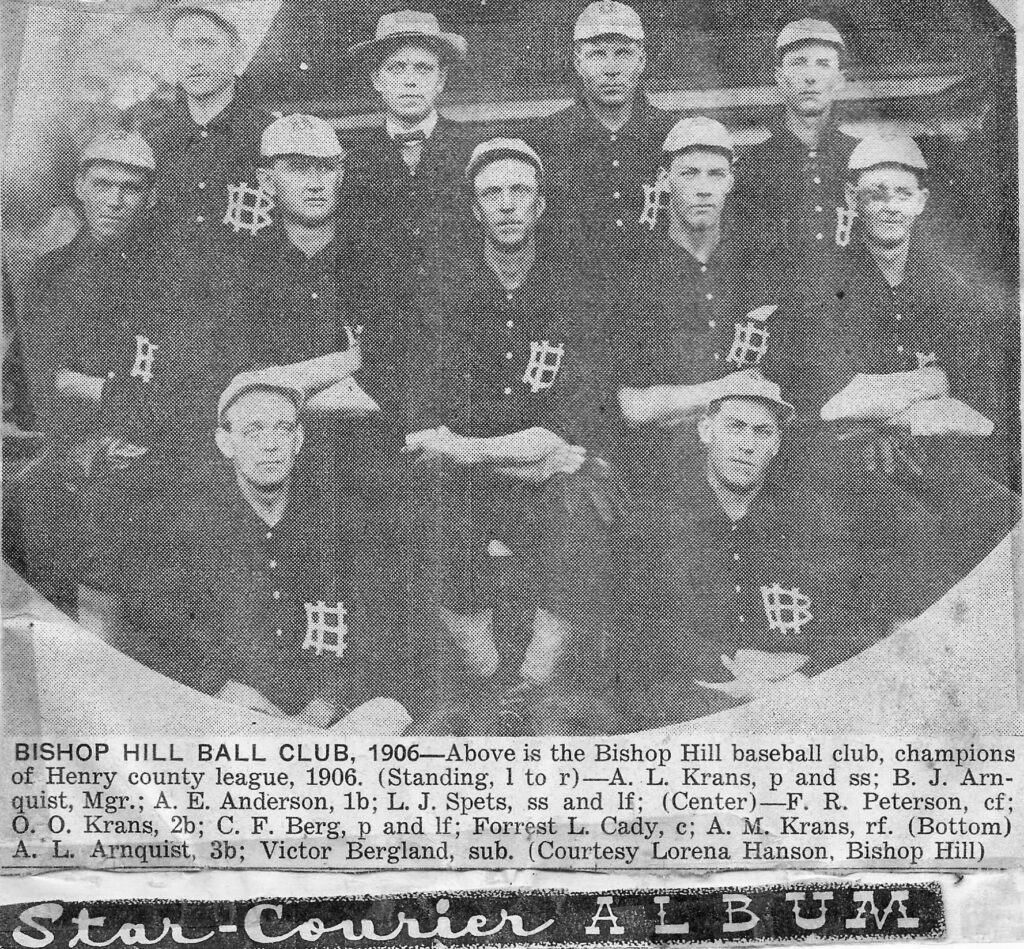
Sports have always been a place of pride in our communities. That is no exception for the Bishop Hill Ball Club back in 1906! There is still a baseball diamond in Bishop Hill that can be utilized for difference events.
Photo from the Henry County Illinois Historical Society
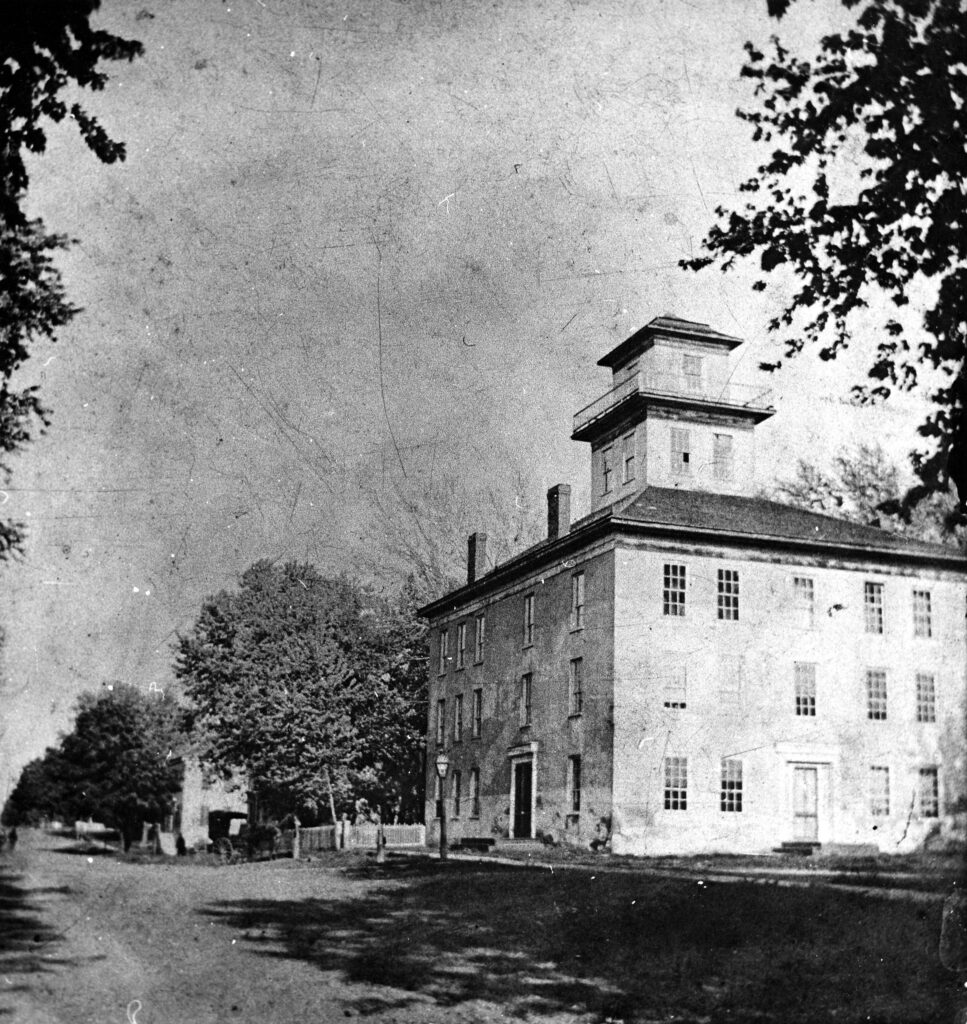
Live music has always been a part of Bishop Hill just like it is today. It used to be the Bishop Hill Brass and Reed band, now it is a rotation of local, regional and international artists at the Bishop Hill Commons that keep people tapping their toes.
Feb. 6, 1883
“The Bishop Hill Brass and Reed band had an entertainment last Tuesday evening. The exercises were good and all who took part performed their part well. The boys undoubtedly cleared several dollars as they were well patronized.”
“Bishop Hill,” Galva Standard, 2/9/1883, 5:4
The band later adopts resolutions, including one thanking “Mrs. Bjorklund and family, for the use of their hall and the largest portion of their entire building to the accommodation of the public present” at the concert.
“Resolutions,” Galva News, 2/15/1883, 1:6
Photograph of Bjorklund Hotel from the BHHA Archives
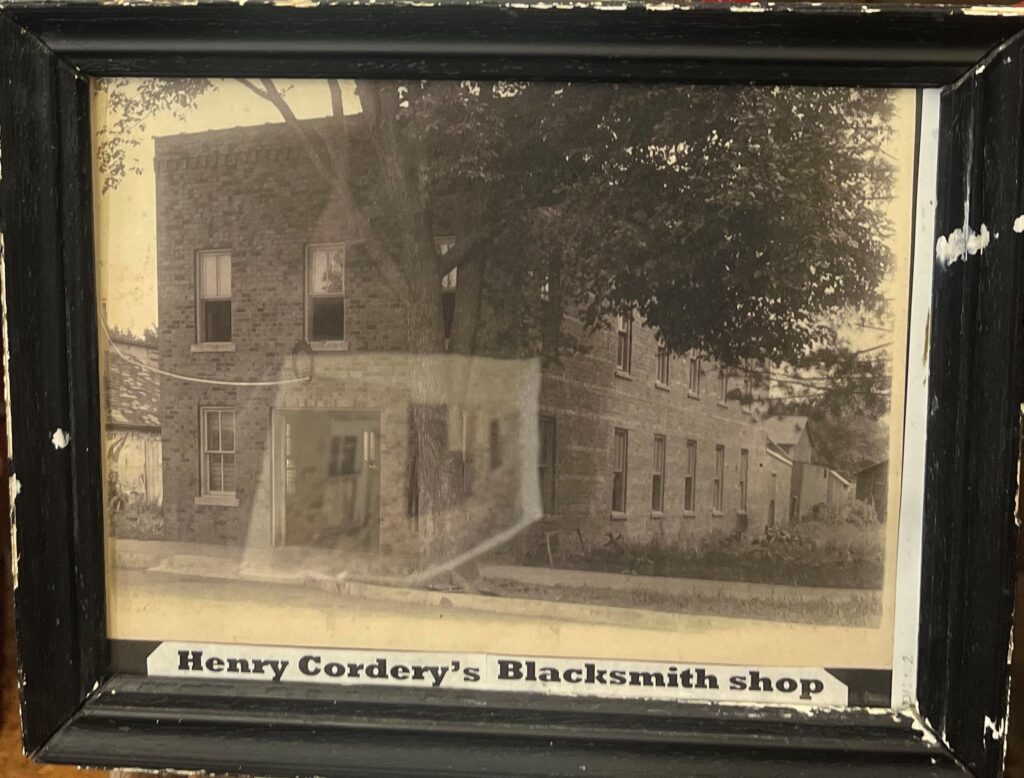
This blacksmith shop was built at 108 North Prospect Street in Cambridge, Illinois in 1918. There is an exhibit at the Henry County Historical Museum of what a blacksmith shop at this time might have looked like.
This image and more are on display at the Henry County Historical Museum. Be sure to stop by this summer to check everything out.
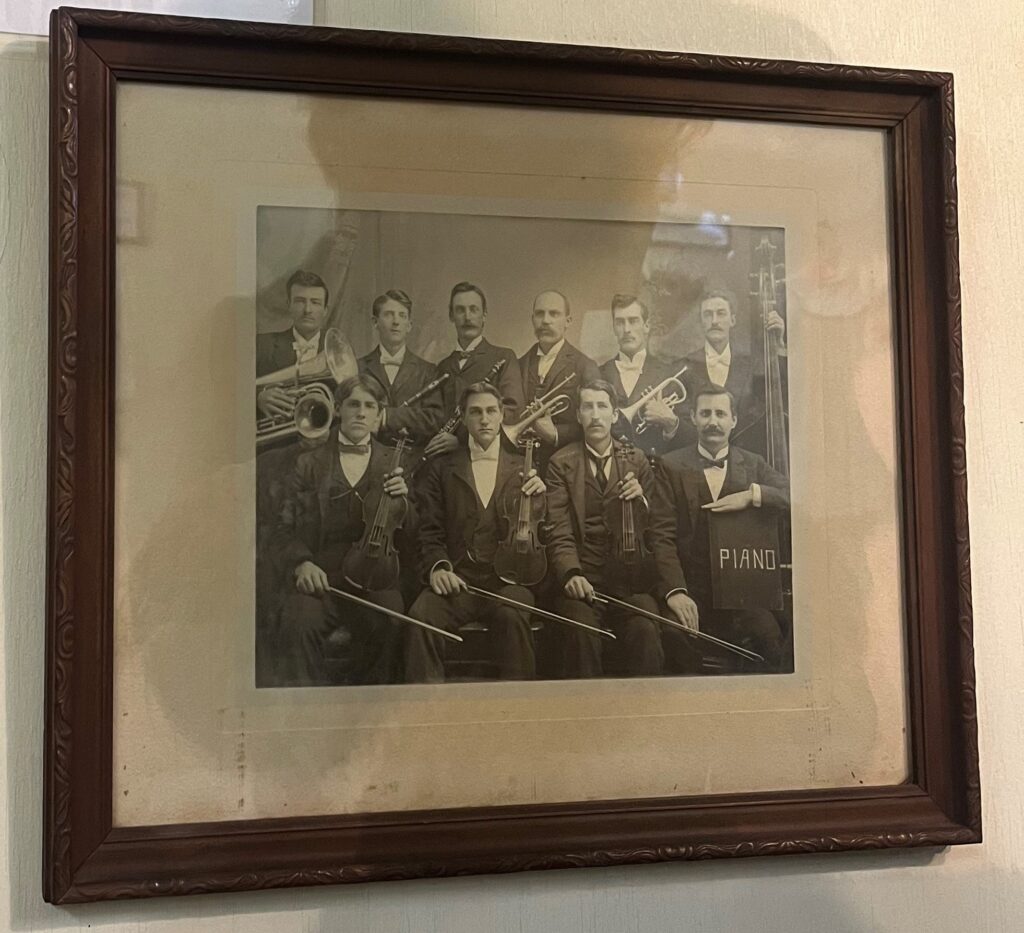
This is a picture of the Eclipse Orchestra of 1897 in Orion, Illinois.
This is just one of the many photos, facts, artifacts, etc. that are on display on the Henry County Historical Museum in Bishop Hill. It will reopen in May. Be sure to plan a trip to find out more!
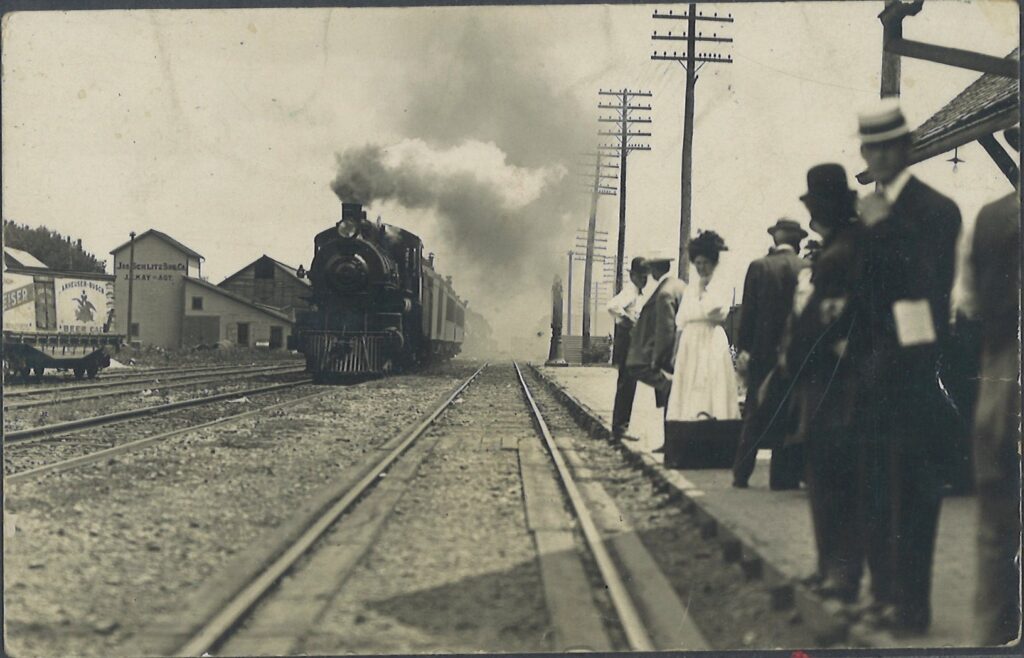
Early photos of the Geneseo train depot and trains passing by. The first passenger train to pass through Geneseo was on February 22, 1854.
Thank you to the Geneseo Public Library for this information and photo!
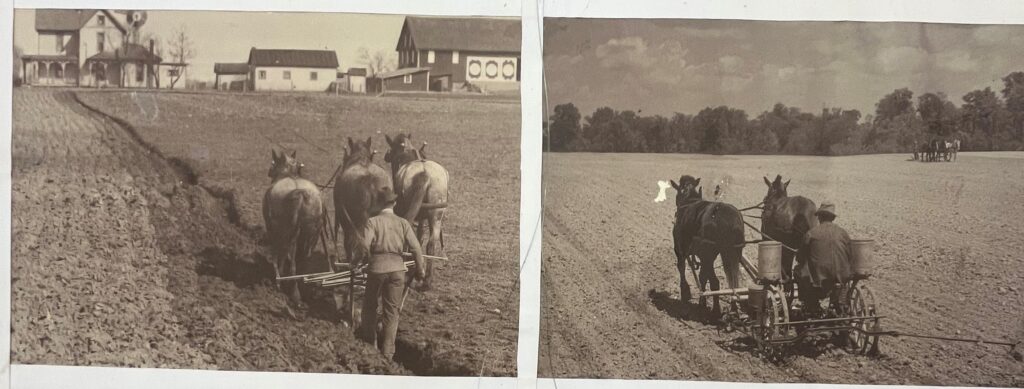
It was farming that first drew settlers to the area in the late 1830’s and 1840’s. By 1880 there were 3,641 farms in Henry County with a total of over 500,000 acres being farmed.
Farming remains one of the main sources of income for Henry County residents. As in most rural areas, the small family farms have given way to larger operations.
At one time, Henry County ranked 1st in the production of oats, 4th in hay and 7th in corn in Illinois. As to livestock, it produces more grain fed cattle than any other county in Illinois. Henry County became the Hog Capital of the World with more hogs than any other county in the United States.
Andover is Henry County’s oldest community. It was started in 1835 by the visionary Presbyterian minister Rev. Ithamar Pillsbury. The fledgling colony was patterned after New Haven, Connecticut, as its founder envisioned it to be a seat of learning, religion and commerce.
The English pioneers had a mill which attracted many early settlers to the village. The mill, which was constructed in 1836, was Henry County’s first industry.
Swedish folk discovered Andover in 1840 when a Swedish seaman, Sven Nelson, became a “landlubber” and settled to enjoy the beautiful prairie land and the scenic Edwards River.
Folks from Nelson’s homeland learned about Andover and sailed the Atlantic Ocean, traveled by canal boat and covered wagon, and even walked long distances to settle here. These early settlers met with Andover hospitality which exists in the village today.
Andover, of English and Swedish history, has preserved this heritage for visitors. The past is joined with the present in a pleasant Illinois rural atmosphere. There are 25 information signs located throughout the Andover area telling about special sites.
This information and more can be found on Andover’s village website at www.andoveril.org.